2025 in review
In 2025, our work continued to focus on sustainable mobility, resilient cities, governance support, and community empowerment. Below, we present the highlights of the year.
Explore it, read it, and share it with others.
Thank you for being part of this journey!
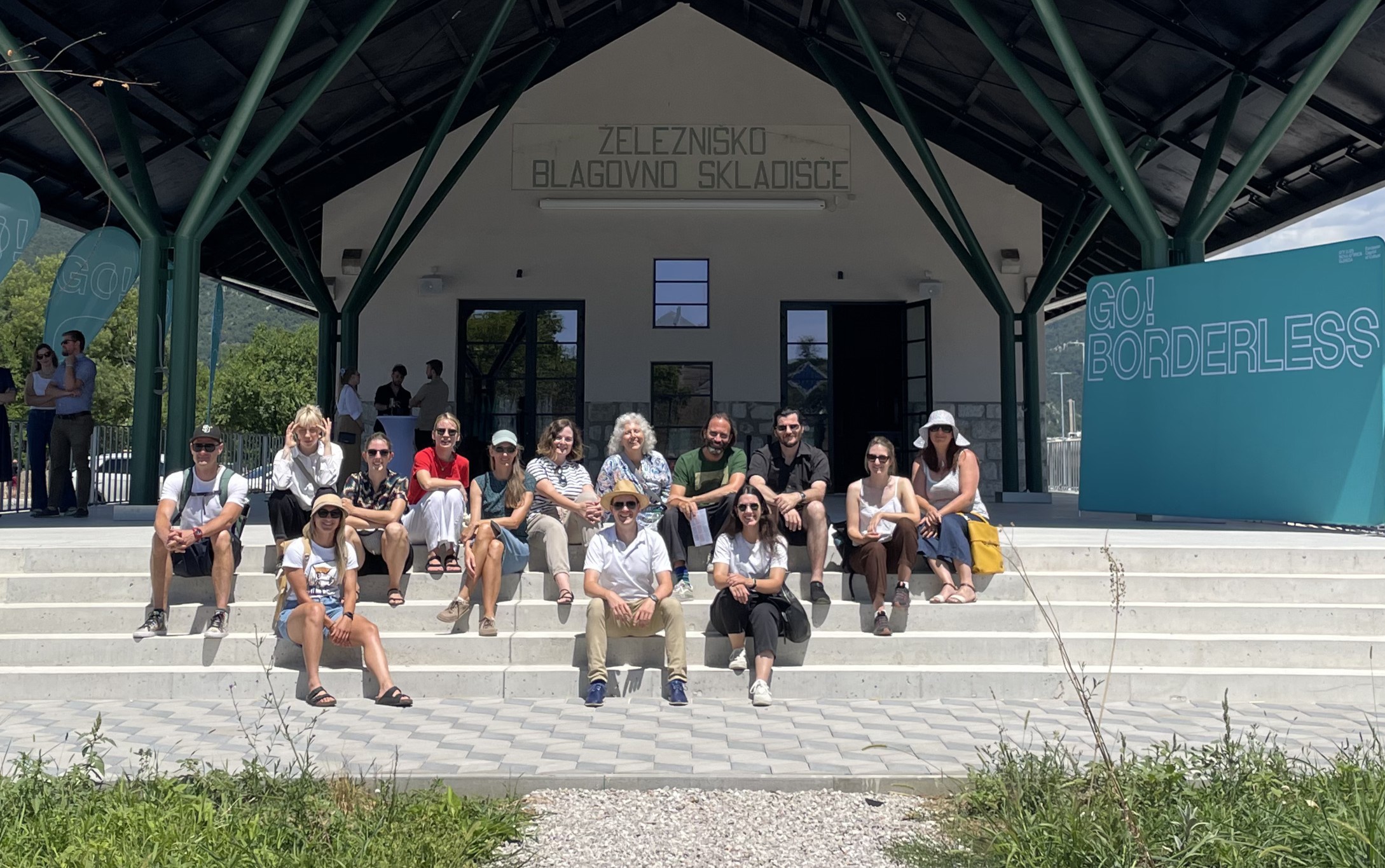
Photo: IPoP archive
Sustainable Mobility
Sustainable mobility remains one of the core pillars of our work. Because everyday travel habits are among the most challenging to change, we placed particular emphasis on promoting sustainable and active modes of travel to school and work. At the same time, we continued to strengthen our role as a trusted expert partner in planning and managing sustainable mobility across transport networks, both locally and internationally.
Active Mobility
Our study Why do Slovenians travel the way they do? (Zakaj ljudje potujemo tako, kot potujemo?), conducted for the third time, examined how values, motivations, and everyday routines shape people’s travel decisions. More than 2,200 people of different ages, education levels, and places of residence took part—85% of whom had already participated in 2020 and 2022. TThe findings reveal a clear trend: people want to travel more sustainably and would often choose public transport if it were a viable alternative. In practice, however, many still rely on the car because it is faster and more reliable. The most common car trips are to kindergarten and for major shopping trips. Compared with 2020, the share of car trips for work-related errands has decreased, which may also reflect the growing prevalence of remote work. The study also shows an increase in bicycle ownership, even though the number of daily cyclists has slightly decreased.
Through our call for municipalities to receive support in communicating sustainable mobility measures, we selected the Municipality of Cerkno in 2025. Through the local campaign (Pačas pa palahn), we supported the municipality in communicating the redesign of a traffic-burdened and locally important section of the state road running past the school. The redesign introduced safer pedestrian infrastructure and new lighting. Following completion, the speed limit on the section was reduced from 50 km/h to 30 km/h. These improvements increased safety for all road users, particularly children on their way to school, and reduced average speeds on the stretch by 10 km/h.
Our national campaign Bike to Work (Polni zagona kolesarimo v službo) ran for the fourth time. It brought together almost 2,000 participants from 98 municipalities. During the challenge, they cycled more than 230,000 km and saved 36 tonnes of CO₂ by choosing the bicycle for their commute. For the first time, employers could also join with their own profiles: 79 organisations participated, strengthening active mobility within their teams. The stories that emerged during the challenge continue to inspire us.
As part of the programme Active Travel to School and a Healthy City (Aktivno v šolo in zdravo mesto), we continued in both spring and autumn with systematic support for schools and municipalities implementing the Walking Bus (Pešbus) and Bike Train (Bicivlak). The autumn campaign showed that more than 4,500 children walked to school with Pešbus. A key pillar of our support remains the annual training programme for Pešbus and Bicivlak—for schools, municipalities, and volunteers helping build know-how, strengthen networks, and ensure long-term implementation.
We concluded the third three-year cycle of the programme with the closing conference on walkable and health-friendly environments (Hoji prijazno okolje – od šole do zdrave skupnosti). The event highlighted walking as a fundamental element of sustainable transport policy—an importance also emphasised in the opening address by Tadej Žaucer from the Ministry of the Environment, Climate and Energy.
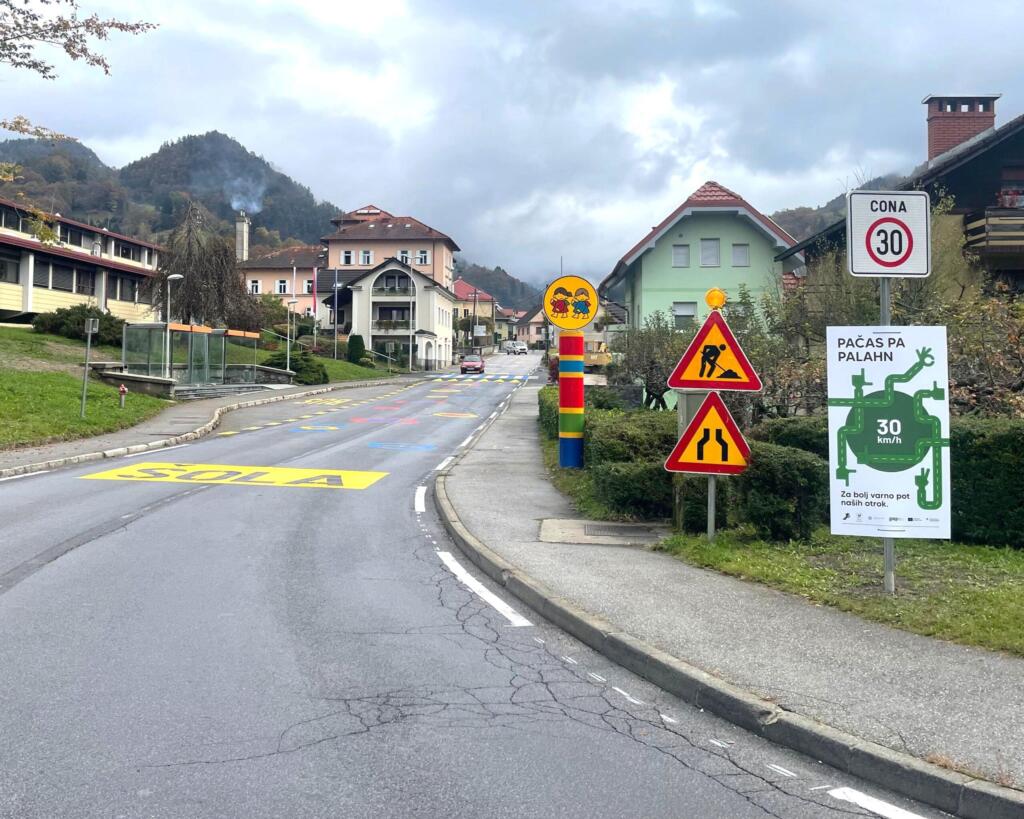
Photo: Nela Halilović / IPoP
An important outcome of the programme is also the new handbook Let’s Plan Healthy Cities Together (Načrtujmo skupaj zdrava mesta), which offers local communities professionally grounded, field-tested tools for planning walkable, health-promoting environments.
Mobility Planning and Management
We completed the development of 19 Municipal Sustainable Mobility Plans in 2025. Alongside the City of Ljubljana and the City of Celje, strategies were also prepared for 17 other municipalities across Slovenia. The work was carried out by IPoP in partnership with RRA LUR and LUZ. IPoP’s role was to lead the public engagement process throughout all stages of strategy development.
We also produced the Parking Policy Guidelines, a national framework supporting municipalities in developing Municipal Parking Policy Implementation Plans and in designing more effective, evidence-based approaches to parking management. The guidelines aim to embed parking policy within integrated transport and spatial planning. For these national guidelines, developed in a consortium with RRA LUR and LUZ, we received the prestigious EPA Award 2025 (the “Parking Oscar”), awarded by the European Parking Association for best practice in the field.
We explored solutions for sustainable, efficient, and user-friendly public transport through dialogue and the international exchange of experience at the conference Fast Forward Towards Sustainable and Friendly Mobility – Accelerating the Transformation of Public Transport. The conference was organised in cooperation with the Embassy of the Kingdom of the Netherlands in Slovenia and the Ministry of the Environment, Climate and Energy.
The project PopUpUrbanSpaces entered its final implementation phase in 2025. The project uses tactical urbanism to promote active mobility and create more people-centred urban environments. We supported partners through workshops, local action plans, and the handbook Making Space for People, which presents tools and lessons from partner cities.
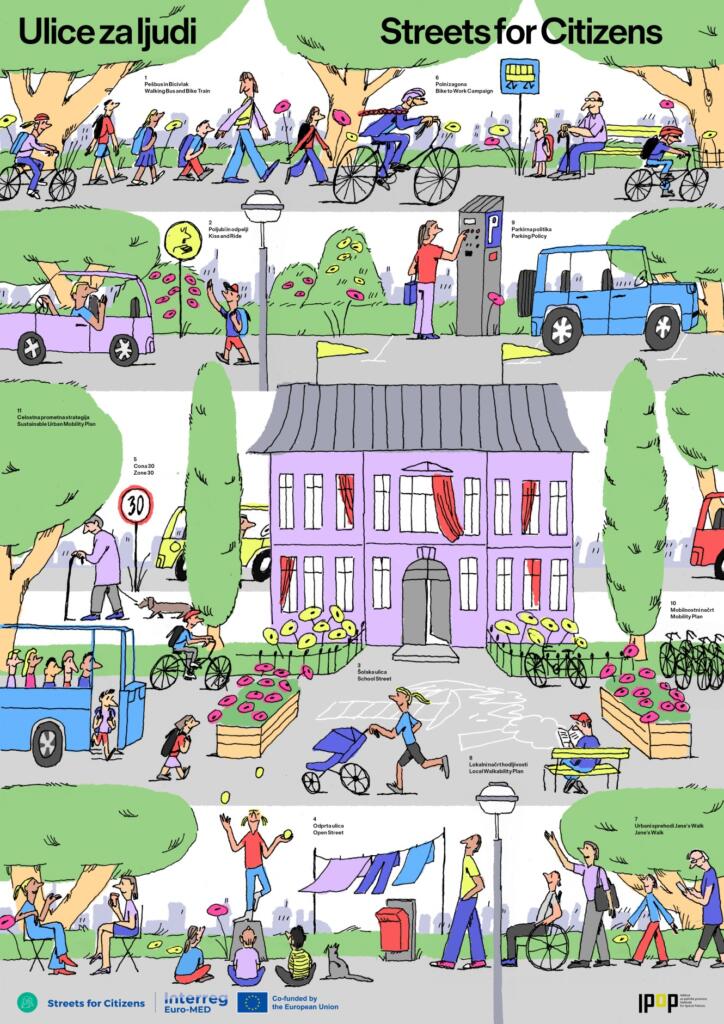
Together with Public Services Ptuj (Javne službe Ptuj) as the lead partner, we continued to support international partners from seven countries in designing and testing tactical urbanism pilot projects within the European project Streets for Citizens, which aims to create more pleasant cities for pedestrians and cyclists. We also presented campaigns, good practices, and sustainable mobility measures that IPoP contributed in the bilingual brochure/poster Streets for People (Ulice za ljudi).
In partnership with the Municipality of Kranj, we are implementing the KReATIVE project under the Mission for 100 climate-neutral and smart cities by 2030, addressing urban mobility challenges in Kranj. IPoP coordinates stakeholder engagement and supports cross-departmental coordination within the municipality to reduce car dependency and promote active mobility. In 2025, we brought municipal departments together into a joint working team, explored key challenges and opportunities, and defined the first steps towards meaningful change. We also supported the municipality in communicating the new traffic arrangement on Župančičeva Street (Župančičeva ulica), which is now safer and more pleasant, especially for schoolchildren.
For the Municipality of Šoštanj and BTC City Ljubljana, we developed and completed a Parking Policy Implementation Plan. In doing so, we were the first in Slovenia to use scancar technology, an automated system for collecting data on parking occupancy and use, which enables faster, more accurate analysis of real-world conditions and supports the development of more robust, evidence-based parking policy measures.
Governance Support
We continued our work within the National URBACT Point and the Urban Point of the European Urban Initiative (EUI). We promoted current calls, supported applicants, and connected Slovenian partners whose proposals were successful. We also took part in international meetings hosted by Slovenian partners. In May, in Maribor, we co-organised the event Explore My Good Practice (Spoznaj mojo dobro prakso) with the Association of Municipalities and Towns of Slovenia, focusing on integrated approaches to traffic calming and public space design. Municipalities and experts exchanged experiences and presented concrete measures—from 30 km/h zones to temporary traffic arrangements and street redesigns that place people first.
We organised two further events in November. In Celje, we delivered a two-day European Urban Initiative training on integrating horizontal principles into urban development projects, equipping participants with practical knowledge and tools while strengthening peer exchange and networking between cities, national institutions, and European experts. In Ljubljana, we hosted an international conference Women and Public Space: Cities for Everyone (Ženske in javni prostor: Mesta po meri vseh), which placed questions of equality and inclusive urban design at the centre of the discussion.
Poster Streets for Citizens
In the Mesta >> mestom #5 catalogue, we presented 18 examples of URBACT good practices in sustainable urban development—demonstrating impact, an integrated and inclusive approach, and strong potential for transferability, while responding to today’s urban challenges. The catalogue features five Slovenian practices: from the management of an urban forest and temporary use initiatives in Celje, to an energy community in Hrastnik, an inclusive festival in Ljubljana, and the regeneration of a degraded area in Ormož. These are complemented by a selection of international practices that are also relevant for the Slovenian context and comparable to our cities.
In cooperation with the Anton Melik Geographical Institute (ZRC SAZU), we led the development of the Housing Strategy 2025–2032 for Municipality of Kranjska Gora (Stanovanjska strategija Občine Kranjska Gora 2025-2032). The strategy addresses housing affordability, the impacts of tourism, and demographic change, providing guidance for housing development while improving both the accessibility and quality of living in the municipality.
We were pleased to see the success of Slovenian partners in the call for URBACT Transfer Networks: they are involved in six of the 25 approved networks, enabling cities to transfer and adapt proven good practices. We also participated in two flagship programme events—the URBACT City Festival 2025 in Wrocław and the Cities Forum 2025 in Kraków.
Resilient Cities
In cooperation with the Ljubljana Urban Planning Institute (LUZ) and PIC – Legal Center for the Protection of Human Rights and the Environment, we developed the Expert Guidelines for Strengthening the Governance and Maintenance of Green Areas and Trees in Towns (Strokovne podlage za krepitev upravljanja in vzdrževanja zelenih površin in dreves v naseljih). The document brings together expertise from planning, management, and legal perspectives. Its purpose is to highlight that high-quality green space management depends on collaboration between stakeholders at every stage—alongside professionally delivered management and maintenance.
As coordinators of the Spatial Network (Mreža za prostor), we launched a new Climate Programme aimed at strengthening knowledge and collaboration on adapting urban space to climate change. We also supported a new season of Climate Actions, through which network members deliver small-scale local projects responding to climate challenges, and we selected new projects that are already underway.
Together with the City of Celje and eight international partners, we began implementing the UrbanGreenLeap project. The project will strengthen the capacity of small and medium-sized Mediterranean cities to better plan and manage green infrastructure as a key climate adaptation measure. Through six pilot areas, we will foster collaboration between public services and residents, introduce nature-based solutions, and enhance biodiversity.
Community Empowerment
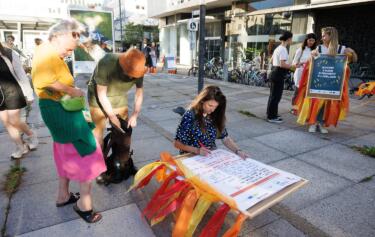
During Jane’s Walk 2025, 13 walks took place across Slovenia in nine cities. Held between 5 and 13 May, they brought people closer to their local surroundings and highlighted the role of walking in everyday life. This marked the 15th edition of the global initiative in Slovenia.
Together with the lead partner, the City of Celje, we launched the MAG-NET project, which aims to build a network of local stakeholders to retain and attract talent in Celje and Prebold. Within the project, IPoP coordinates stakeholder engagement activities and leads a participatory process focused on sustainable mobility.
For the City of Ljubljana, within the ReGreeneration project, we led a public engagement process in the Rakova Jelša area related to planning improvements to the Ljubljanica riverbank. Working with residents, space users, and key local stakeholders, we gathered perspectives, needs, and concerns that will serve as a basis for spatial solutions aimed at improving quality of life while balancing land use with nature conservation.
Through Zunaj 3, we once again helped residents of Ljubljana neighbourhoods bring their outdoor ideas to life. Together with the Prostorož studio and the association Pazipark!, we supported 21 diverse initiatives—from upgrading green areas and playgrounds, installing benches and herb gardens, to creating intergenerational spaces and organising events that strengthen neighbourly ties and improve the quality of public space.
In December, as part of the Spatial Network’s Climate Programme, we organised a public lecture by Sonja Dragović, which sparked discussion on justice in spatial planning. The lecture examined how planning processes can undermine the public good in favour of private interests and how communities mobilise to take part in public debate and prevent this.
Communication, Engagement, and Advisory Participation
We continued with the Debunking Myths of Urban Development project (Razbijamo mite urbanega razvoja), using playful illustrations and short, informative videos to encourage a more informed public debate on spatial development.
At the start of the year, tree cutting on Ljubljana Castle Hill once again triggered strong public reaction. The concern was both understandable and justified: an urban forest functions as public space, and we therefore responded to the intervention. The case raised fresh questions about nature protection and the governance of urban forests, and it underlined why open public discussion in the earliest stages matters so much for a sustainable urban future.

Sonja Dragović’s public lecture. Photo: Matej Pušnik
Following the summer public consultation on the draft Management Plan for the Tivoli–Rožnik–Šišenski hrib Landscape Park, the process once again revealed tensions between the municipality and civil society over the park’s protection, use, and future development. In our response, we again pointed to an insufficiently open process, the absence of key stakeholders, and the need for clearer rules and better-aligned expectations for the city’s park and forest. We are convinced that a broader debate and stronger cross-disciplinary collaboration can improve the plan and reinforce both the protection and the overall quality of this landscape park, because it is one of the capital’s most important urban spaces.
During the summer, we joined a public appeal calling for the protection of trees in Slovenian towns during periods of extreme heat. The appeal urged the state to act through four key proposals. Both experts and the wider public recognise the importance of trees and other living organisms in our towns; it is therefore essential that we care for them and introduce systemic protection measures.
We also responded to the adoption of amendments to the Housing Act and the Act on Financing the Construction of Public Rental Housing. We welcomed these as an important step towards expanding public housing supply, while also warning against a provision that broadens the powers of the Housing Fund (DSU) without clear safeguards and oversight. This increases the risk of lower quality, weaker public accountability, and a drift away from the public interest. We advocated for strengthening public housing funds as the central pillars of sustainable housing provision.
In cooperation with three like-minded organisations, we also responded to the presentation of the new Hospitality Act, which, among other things, regulates short-term rentals. Our position was critical: the proposal gives too much ground to short-term letting interests and does too little to protect the primary purpose of housing, to provide a home.
Throughout 2025, we remained active in several government advisory bodies. Maja Simoneti continued her work in the Climate Council, while Nela Halilović remained a member of the Council for Sustainable Development and Environmental Protection. Both also participate in the Minister’s Council for Spatial Planning and the Environment for cooperation with NGOs. Marko Peterlin continued to serve on the Housing Council of the Republic of Slovenia.
IPoP as an Organisation
In 2025, we introduced several new initiatives and organisational improvements. We continued to invest in professional development and participated in several international events as participants and speakers.
- Aidan Cerar and Anja Slapničar presented contemporary public engagement methods at the international Polis conference—approaches we developed in 2024 together with the Ana Desetnica street theatre festival as part of the preparation process for the City of Ljubljana’s Sustainable Urban Mobility Plan.
- Urban Jeriha presented Slovenian parking policies and the national guidelines at a parking conference in Zagreb, highlighting them as tools for sustainable mobility, transport demand management, and improving quality of life in cities.
We deepened our knowledge by attending events such as Placemaking Europe, Utopian Hours, the Urban Resilience Forum, the URBACT City Festival, Cities Forum, and others.

Debunking Myths of Urban Development project (Razbijamo mite urbanega razvoja)
We redesigned the IPoP website, where our key areas of work (sustainable mobility, resilient cities, community building, and governance support) are now more clearly structured and presented. The updated website makes it easier for visitors to explore our work, access our publications library, and learn about key concepts in sustainable spatial planning.
We established Rastlinjak, a non-profit space that enables civil society organisations to meet and carry out activities. Income from renting the space helps support organizations in adapting to climate and social change. Rastlinjak is located on the ground floor of Stara Tobačna in Ljubljana.
The Ministry of the Environment, Climate and Energy granted us official status as a non-governmental organisation working in the public interest in the field of sustainable mobility. This recognition, however, does not limit our work to mobility alone. IPoP also operates in the public interest in the fields of environmental protection and spatial planning, reflecting our broader commitment to contributing to more sustainable, resilient, and healthy communities in Slovenia.
We were especially proud that the Committee of Ministers of the Council of Europe recognised the Slovenian project Protection and Development of the Slovenian Landscape: Foundations for a Landscape Policy as an exemplary achievement under the Council of Europe Landscape Award 2023–2024. IPoP contributed to the project alongside DKAS (the Slovenian Association of Landscape Architects) and CIPRA Slovenia.

Graphic layout of the redesigned website
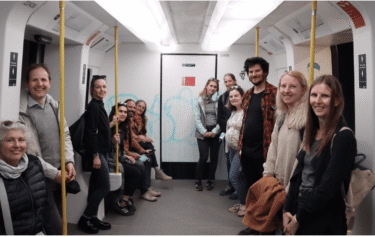
For our annual team trip, we visited the European Capitals of Culture Nova Gorica and Gorizia. With support from the Municipality of Nova Gorica and local experts, we explored blue-green solutions, the shared history of the border area, and newly redesigned public spaces.
Our team was strengthened by new colleagues bringing expertise in landscape architecture, public engagement, urbanism, and geography: Gaja Trbižan, Zala Koleša, Rachela Škrinjar, and Matic Primc. For several months, Mirna Berberović Klander supported our communications work.
What’s Ahead in 2026?
At the start of the year, Urban Jeriha—long-time member of the IPoP team and former Deputy Director—assumed the role of Director. His professional work focuses on mobility management, parking and housing policy, and organisational development. After nearly two decades of dedicated leadership, Marko Peterlin remains at IPoP as a Project Manager and a strong advocate for public transport.
We will also bring our expertise in integrated transport planning to the national level: IPoP is part of the consortium preparing Slovenia’s new National Sustainable Urban Mobility Strategy (DCPS). Our role will be to lead stakeholder engagement and help shape shared goals for the country’s transport system.
Within the European Urban Initiative (EUI), we will contribute to the EffiComfort project. Our work will focus on its participatory dimension: connecting users, operators, and experts, co-designing measures for the “comfort as a service” model, supporting solution testing, and gathering user feedback.
Together with five partners, we are launching the two-year project Building Resilient Communities in Times of Climate Change, supported by the Ministry of Public Administration. The project’s main purpose is to connect NGOs so they can address the social impacts of climate change more effectively, with a strong emphasis on just and inclusive adaptation.
We will continue supporting schools and municipalities in promoting active travel to school. We will upgrade the How Do We Walk to School? (Kako hodimo v šolo?) platform, and in autumn we will organise a regional training programme on planning walk-friendly environments for municipalities and spatial planners.
In March, we will begin the multi-year international project BIZ Mobility, exploring how industrial zones generate traffic and what role their governance plays. Particular attention will be given to strengthening connections between industrial zones and their local and regional contexts, as well as developing concepts for everyday mobility to and from these areas.
We are also pleased that our colleague Aidan Cerar will be among the speakers at Urban Future 2026, taking place in Ljubljana from 24 to 27 March 2026. He will present Zunaj—a support mechanism that helps residents improve their living environment—developed for the City of Ljubljana together with the Prostorož urbanism studio.
A new call for municipalities will soon open for those wishing to introduce sustainable mobility measures in 2026 and seeking communication support. Through the LIFE IP CARE4CLIMATE project, we will support the selected municipality in communicating transport changes clearly and effectively while encouraging more sustainable travel habits.
In 2026, our two-month challenge begins on 4 May—join us at polnizagona.si.
Join us as we continue this journey.
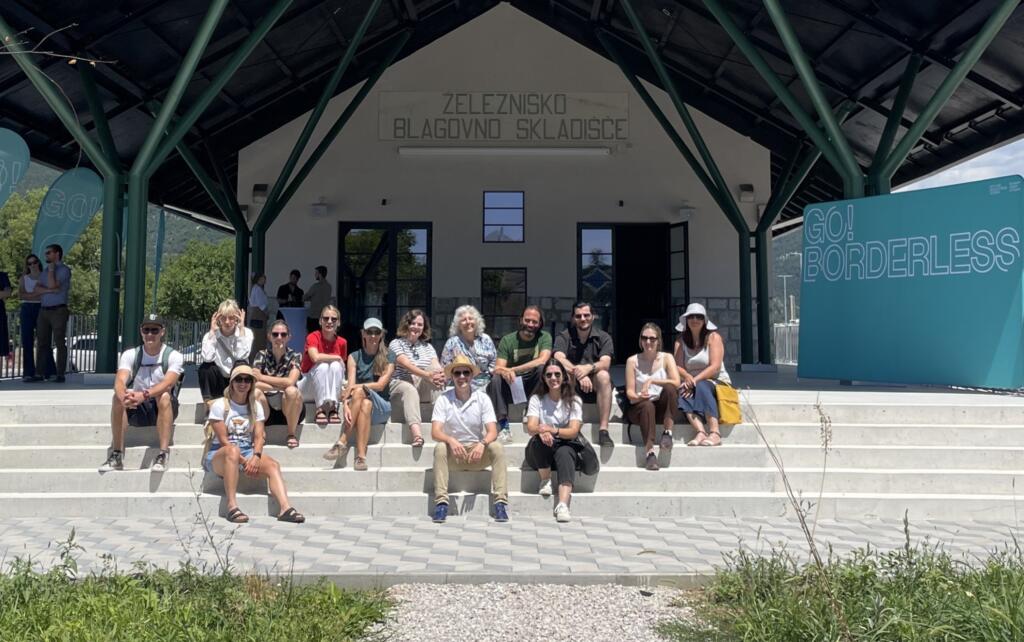
Photo: IPoP archive