
Women and public space: How inclusive planning transforms cities

Foto: Sergej Semibratov
Public open spaces are essential to quality of life, social interaction, and participation in the community. Although we often treat them as neutral and universally accessible, experiences of users tell a different story: the accessibility, quality, quantity, and usability of public space vary greatly depending on who uses it. Everyday observations and different life situations reveal that some spaces are far more suitable for walking, playing, and socialising than others—largely due to visibility, maintenance, accessibility, a sense of safety, greenery, and the presence of benches and people.
Research consistently shows that many groups – women, older people, children and their caregivers, young people, LGBTQ+ communities, and migrants – are rarely adequately represented in planning processes. As a result, they encounter challenges that too often remain invisible: a lack of safety, poorly adapted public transport, uncomfortable or neglected surfaces, and a general feeling of discomfort or exclusion. Girls over the age of ten tend to stay indoors while boys play football outside; older women are more exposed to accidents on uncleared pavements; and in disadvantaged neighbourhoods, parks are fewer and less shaded, offering limited opportunities to enjoy outdoor spaces. Unless cities systematically recognise and address these differences, inequalities persist precisely where we assume neutrality: on pavements, playgrounds, and in parks, not only in the labour market or pay.
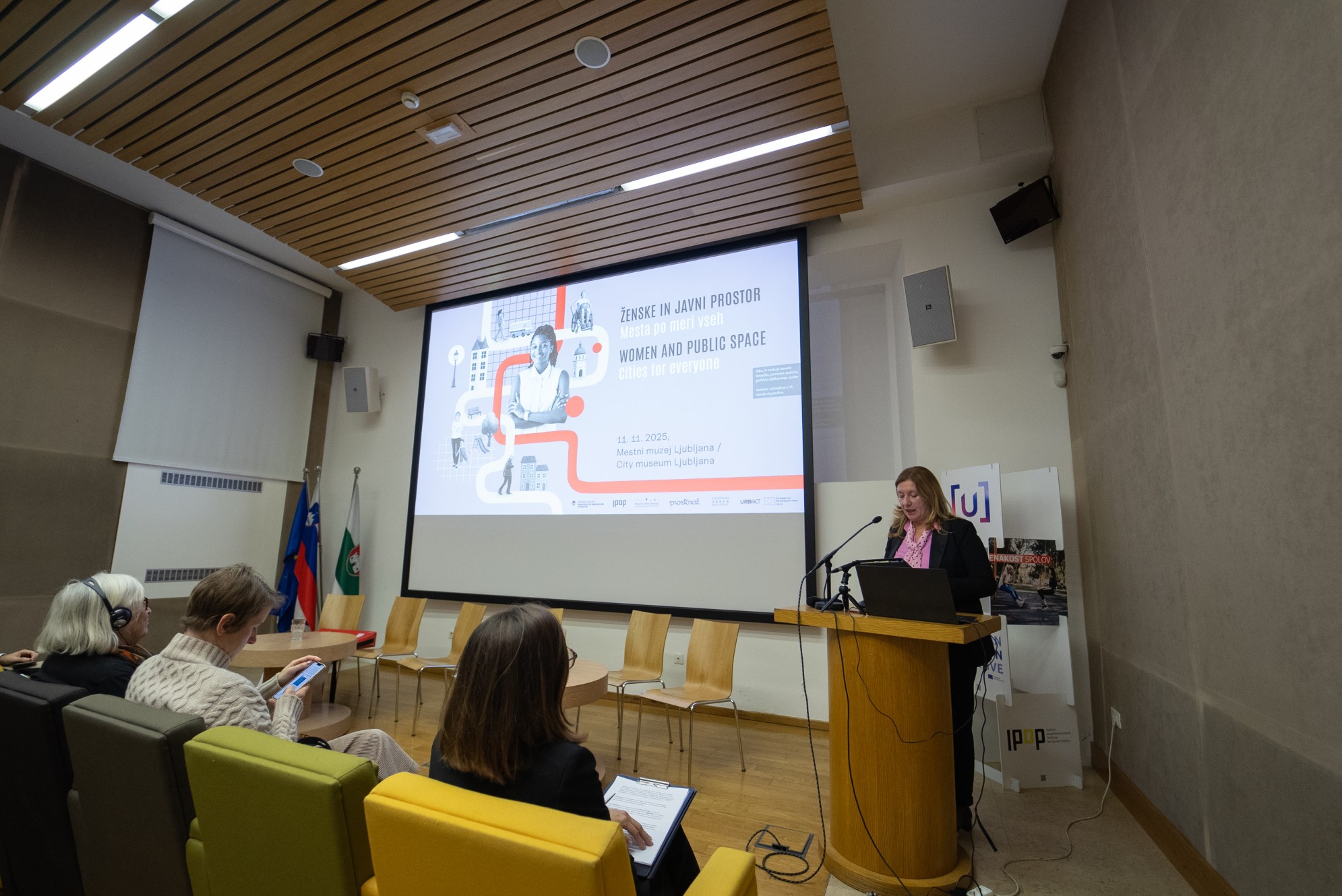
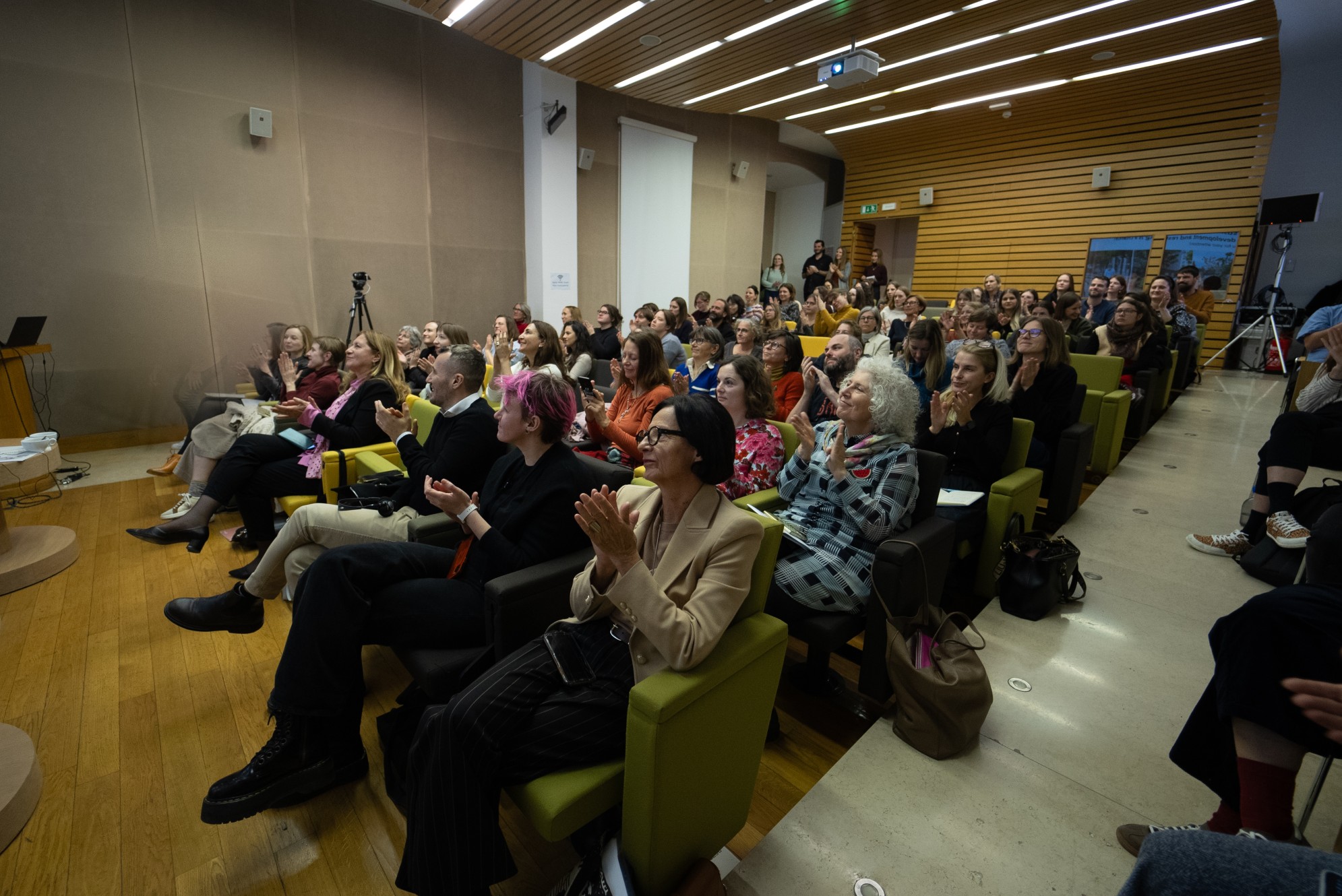
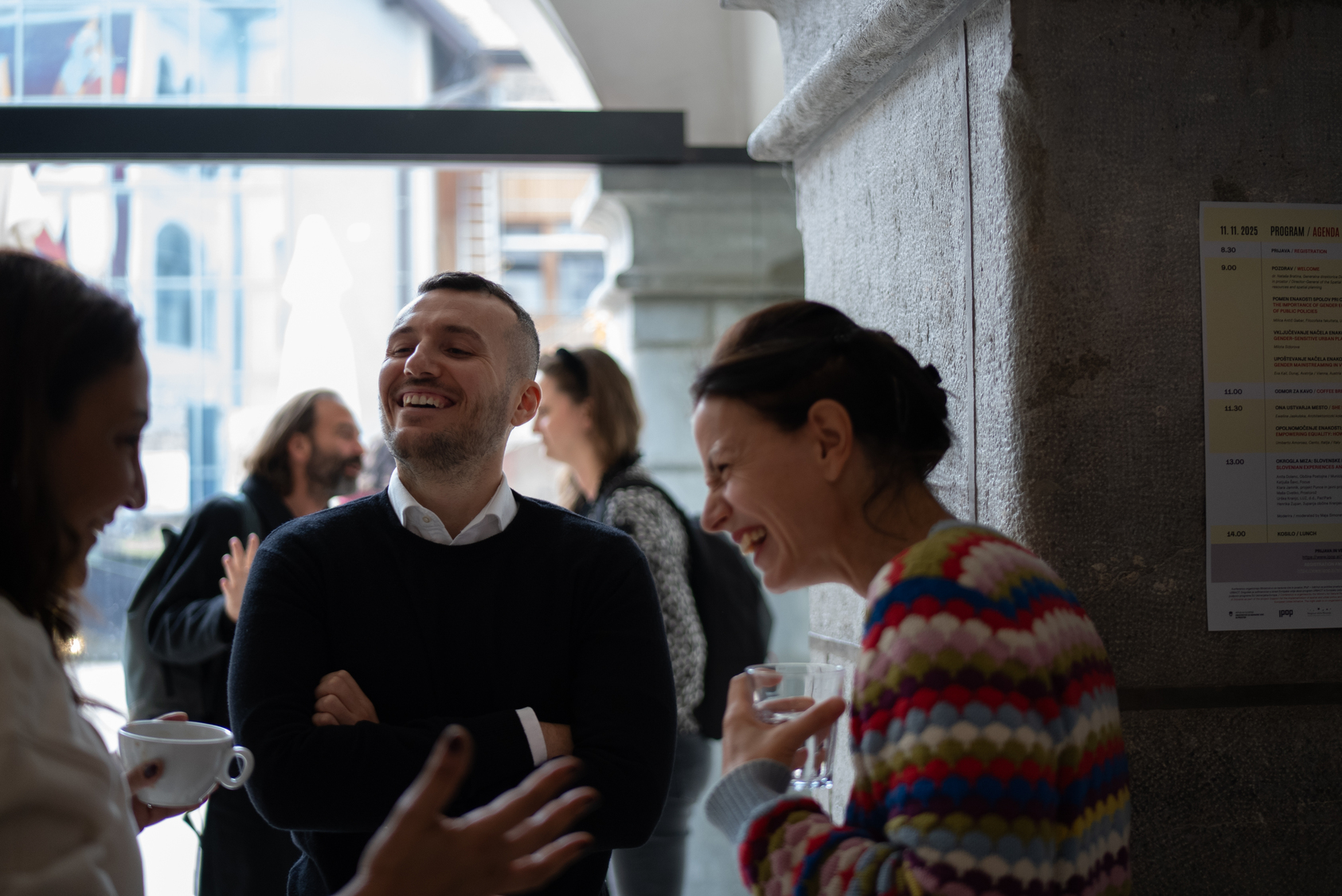
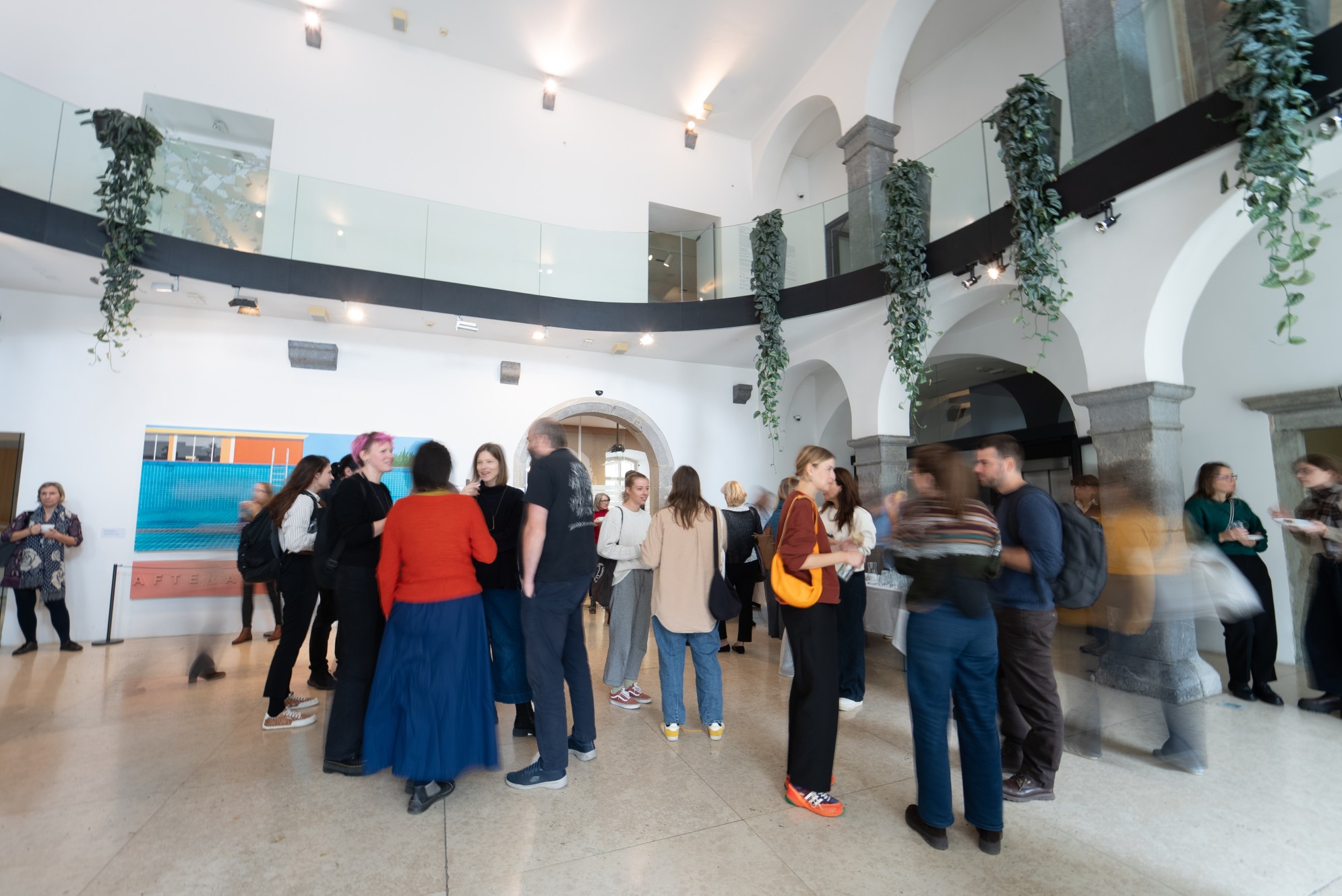
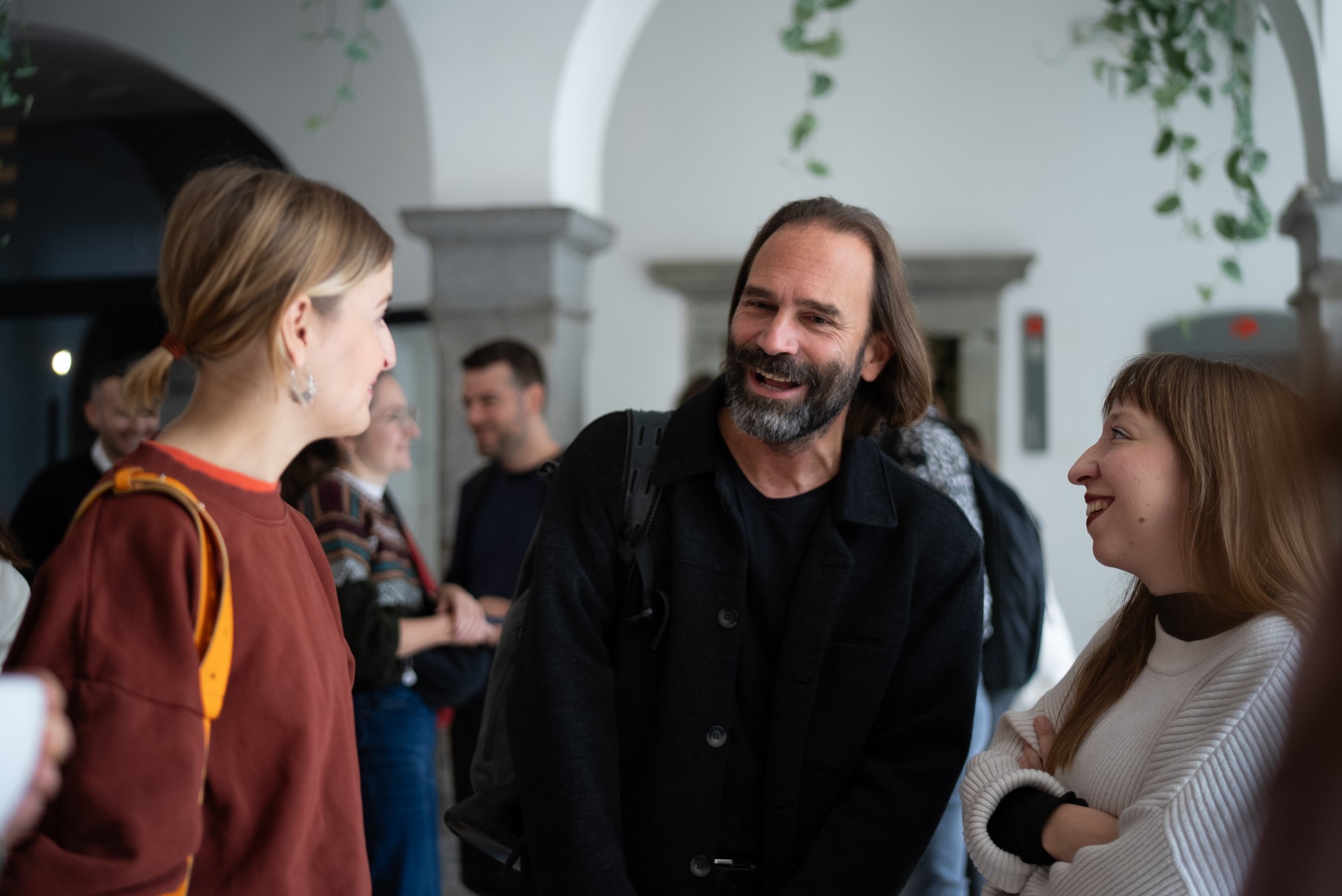
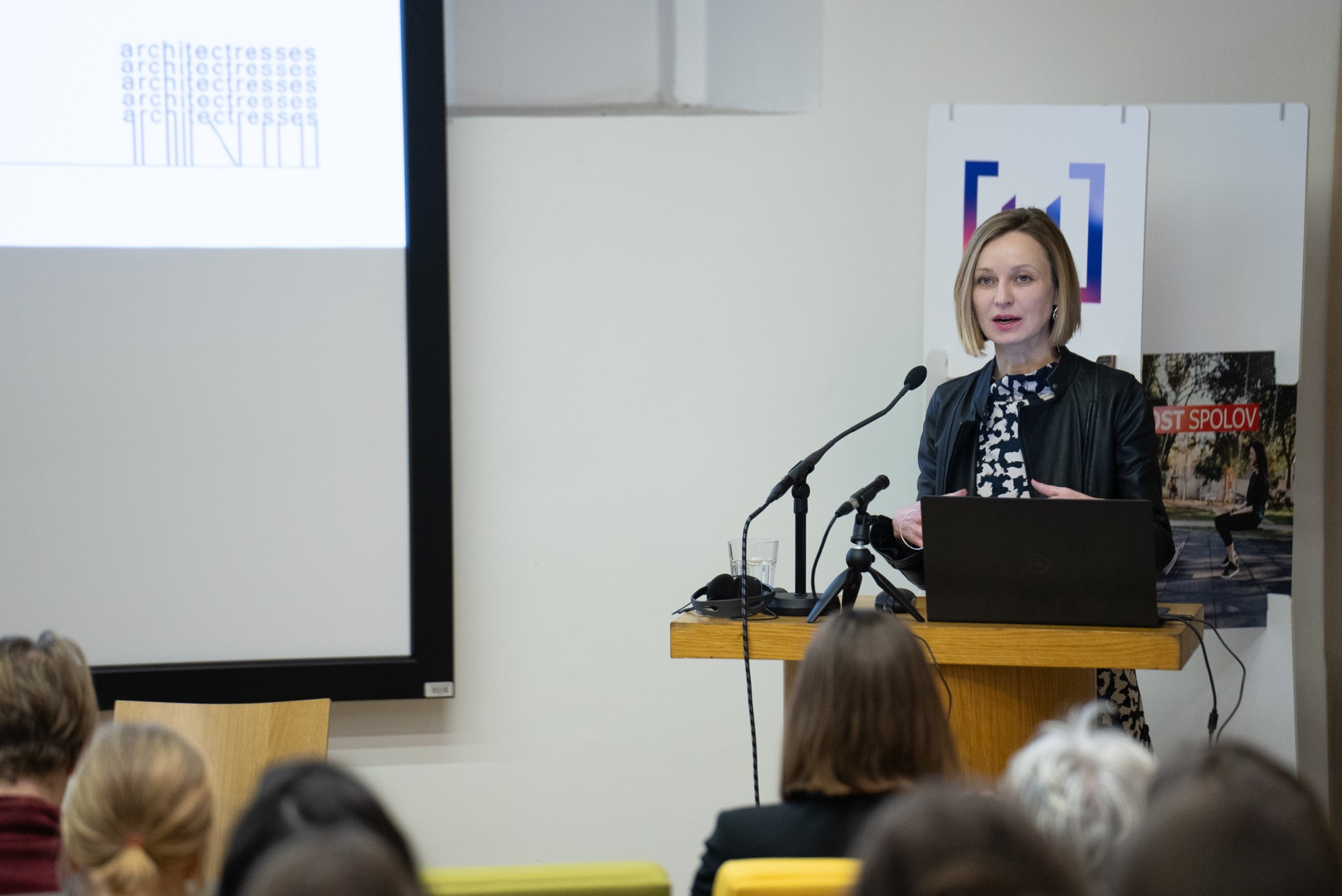
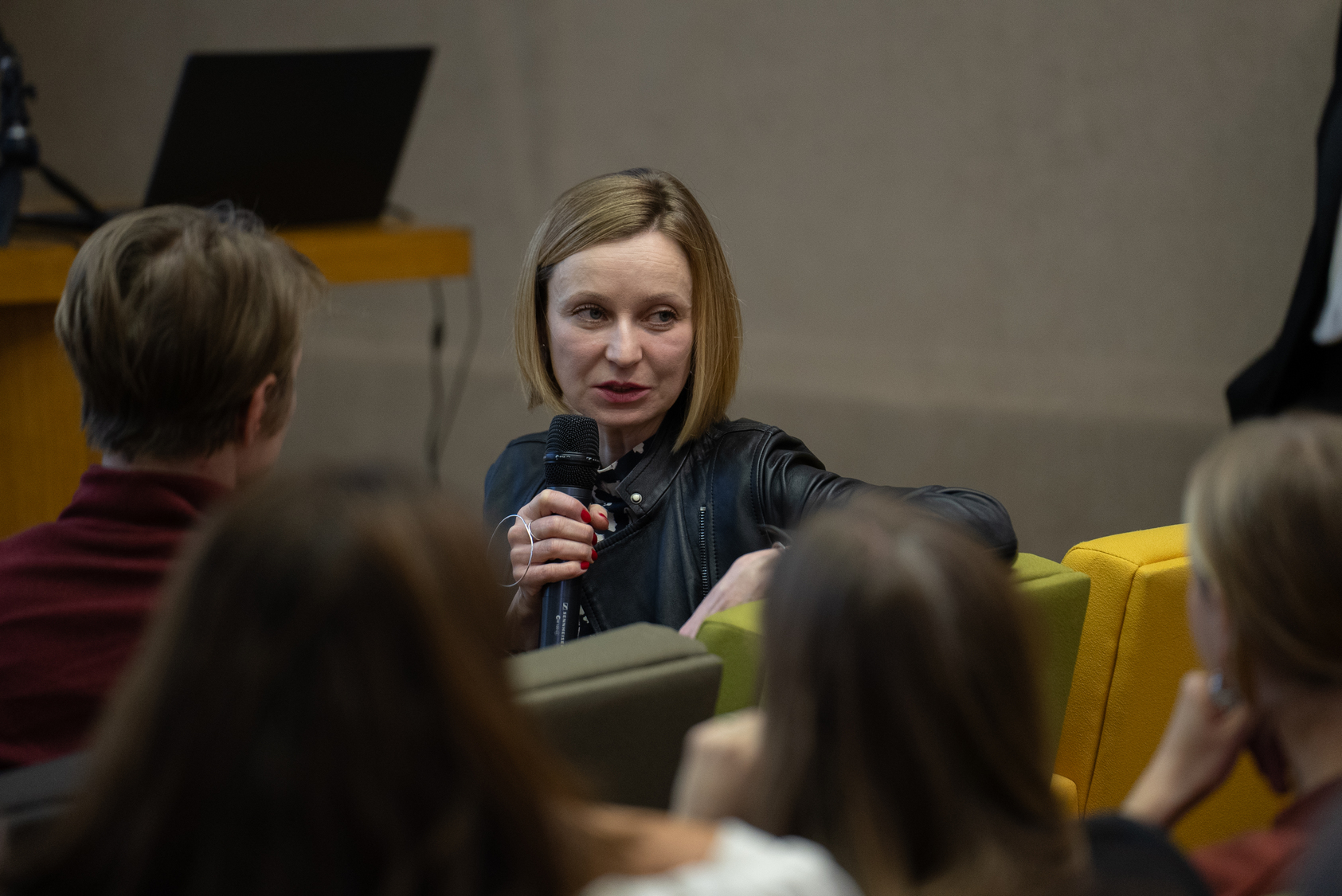
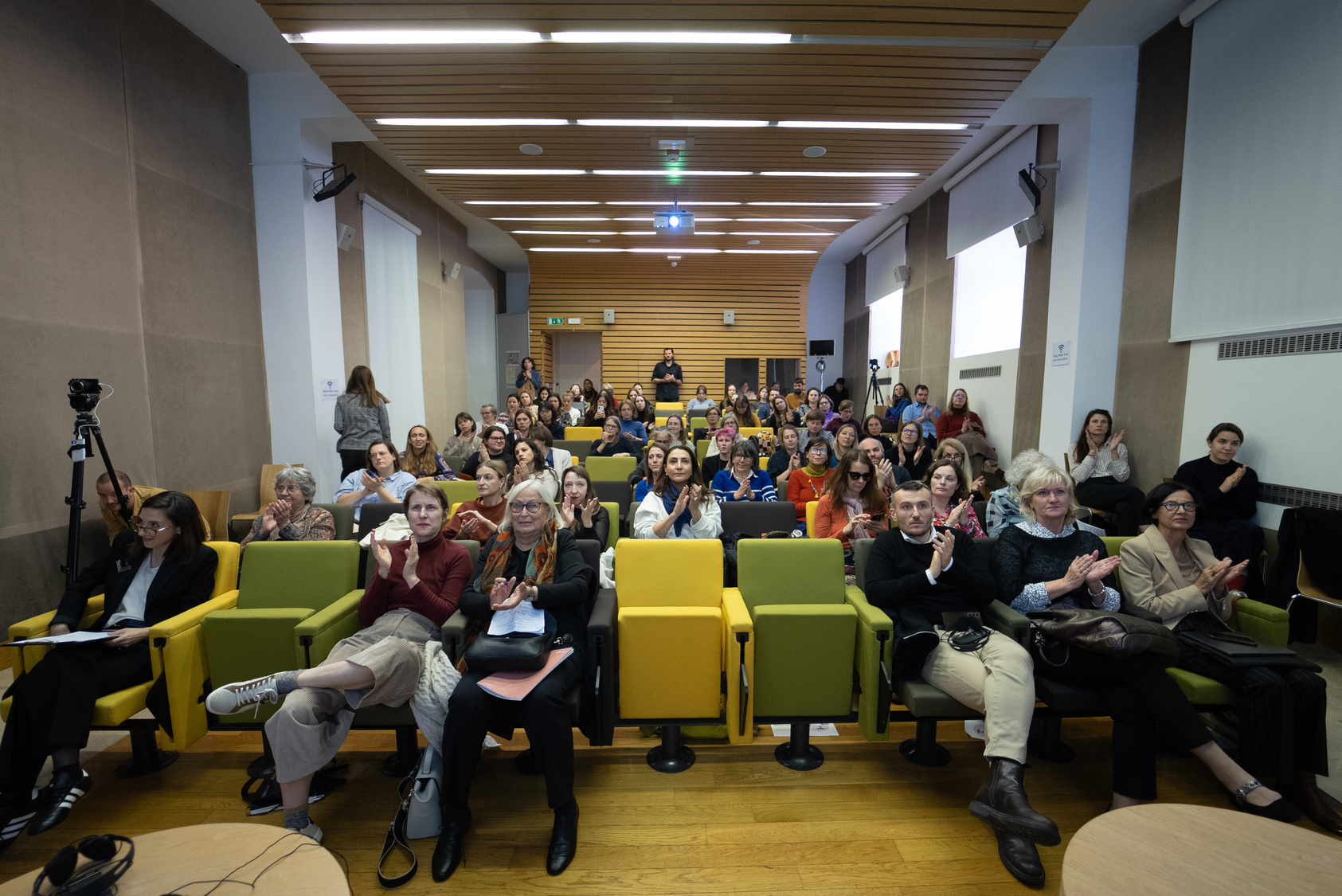
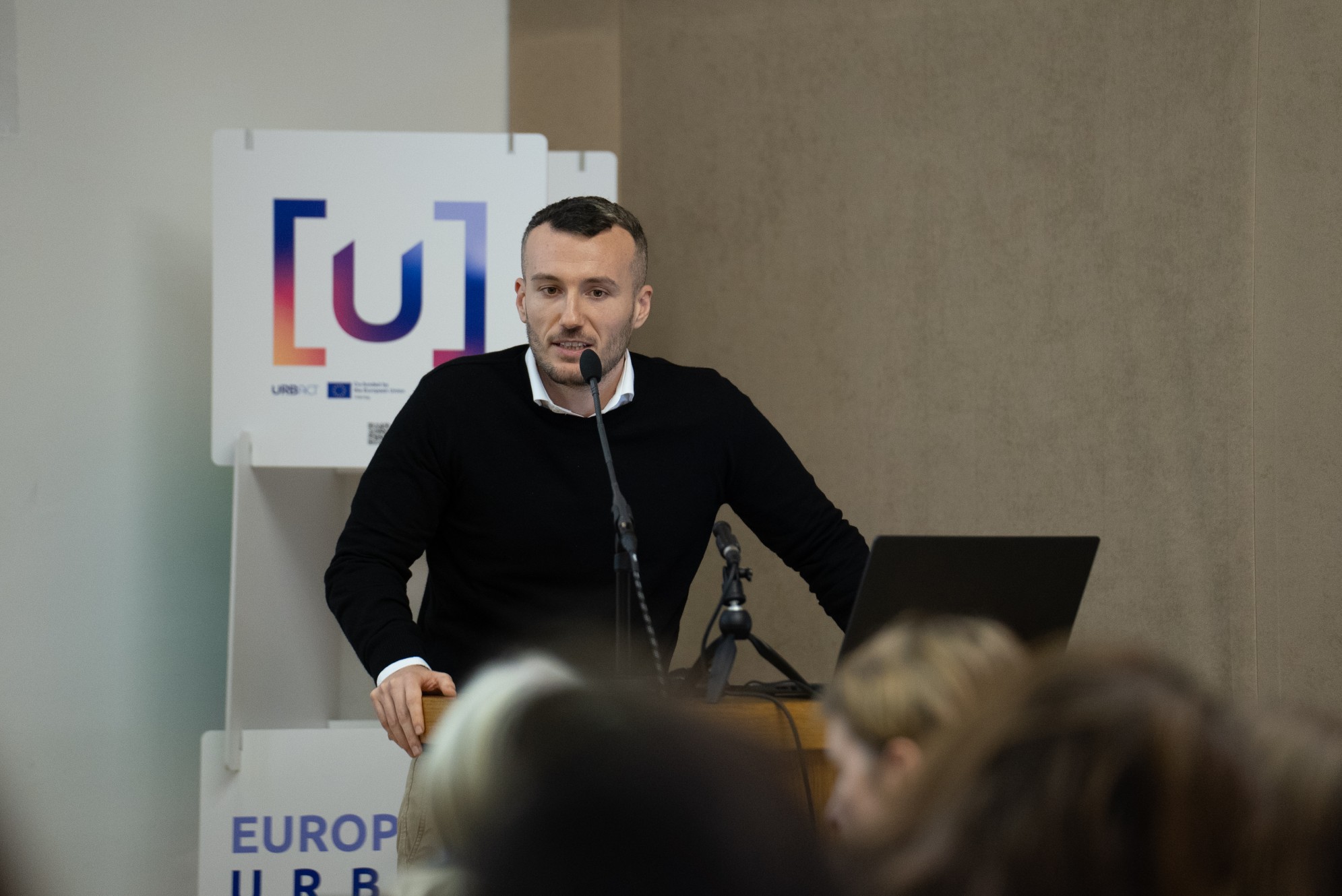
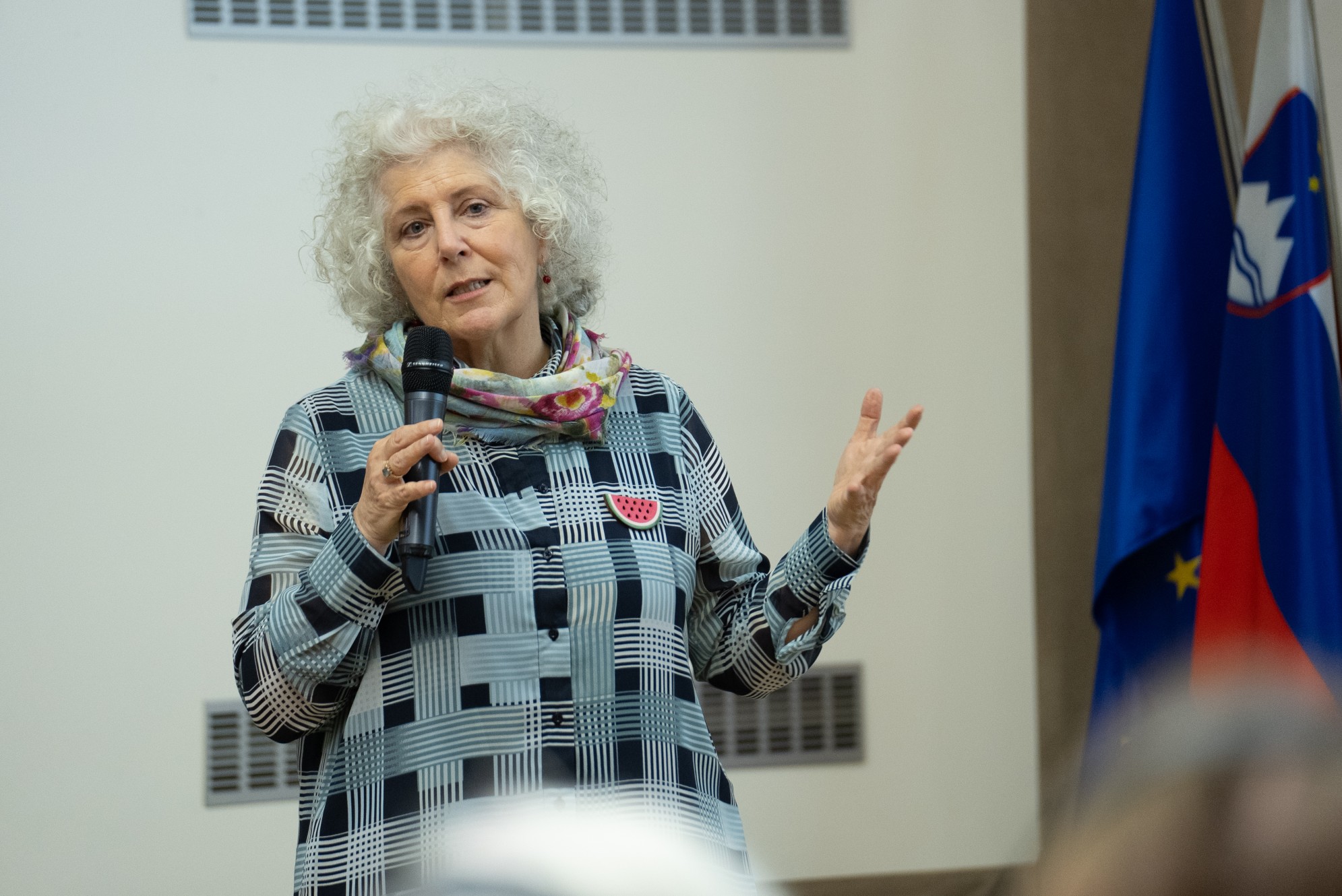
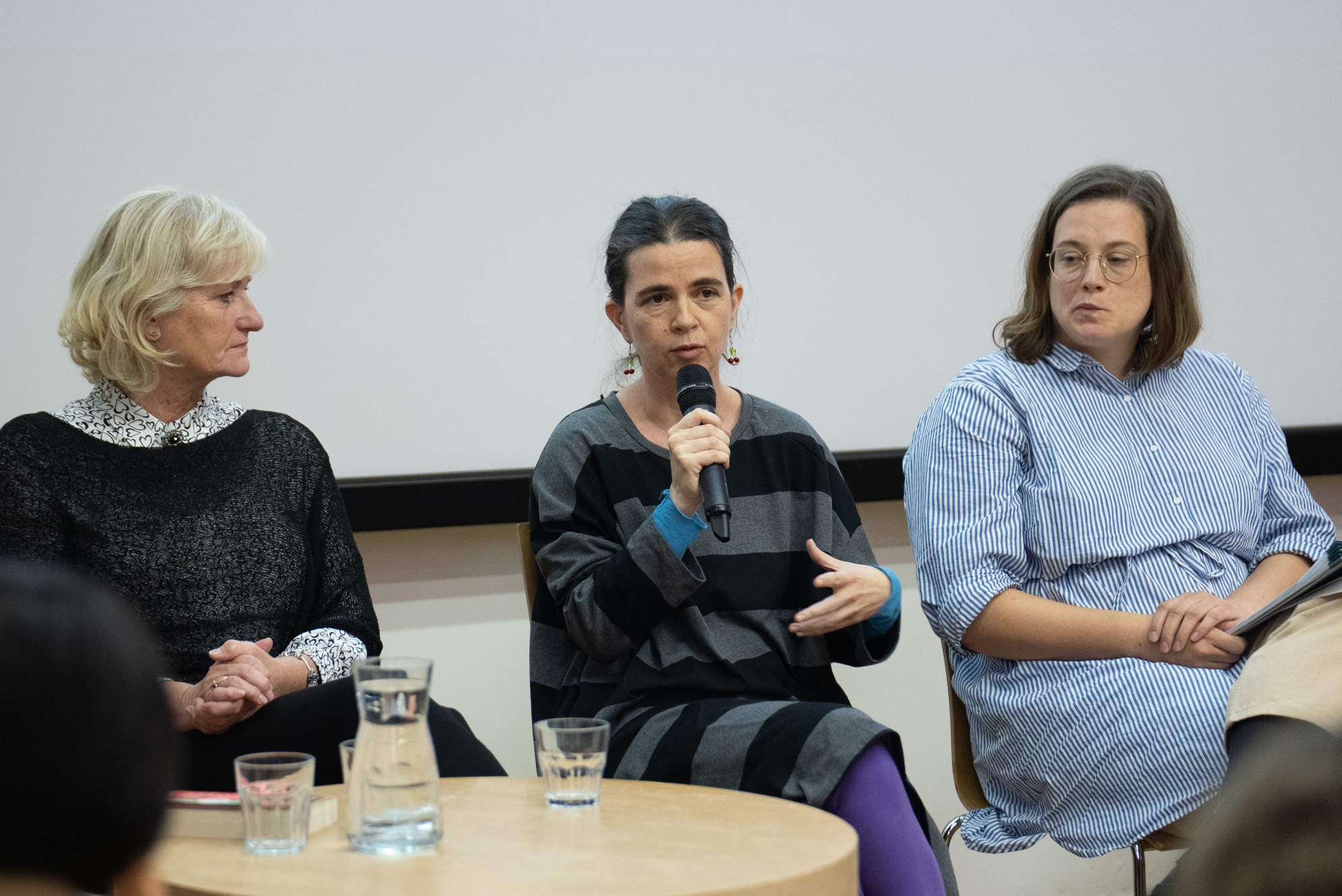
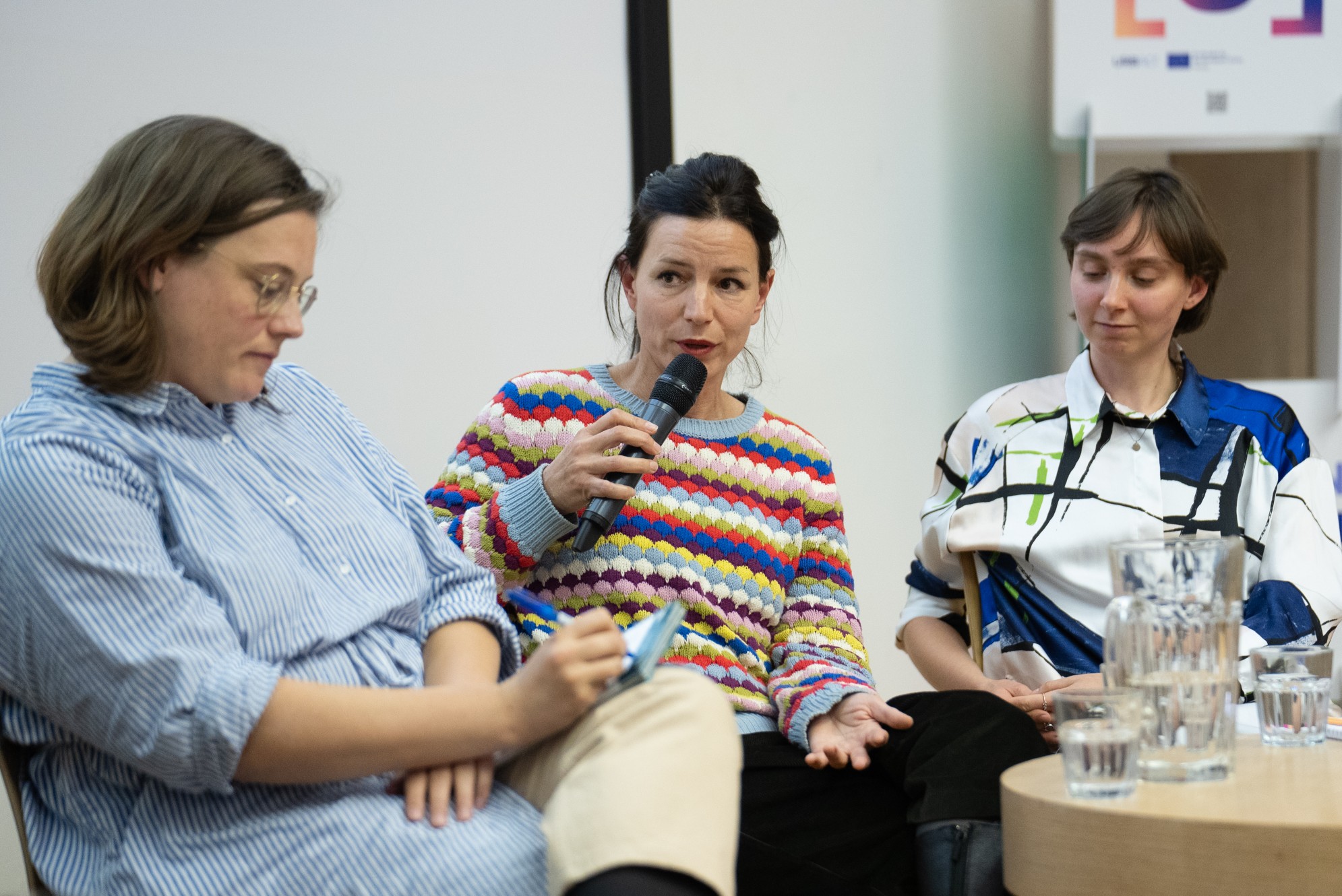
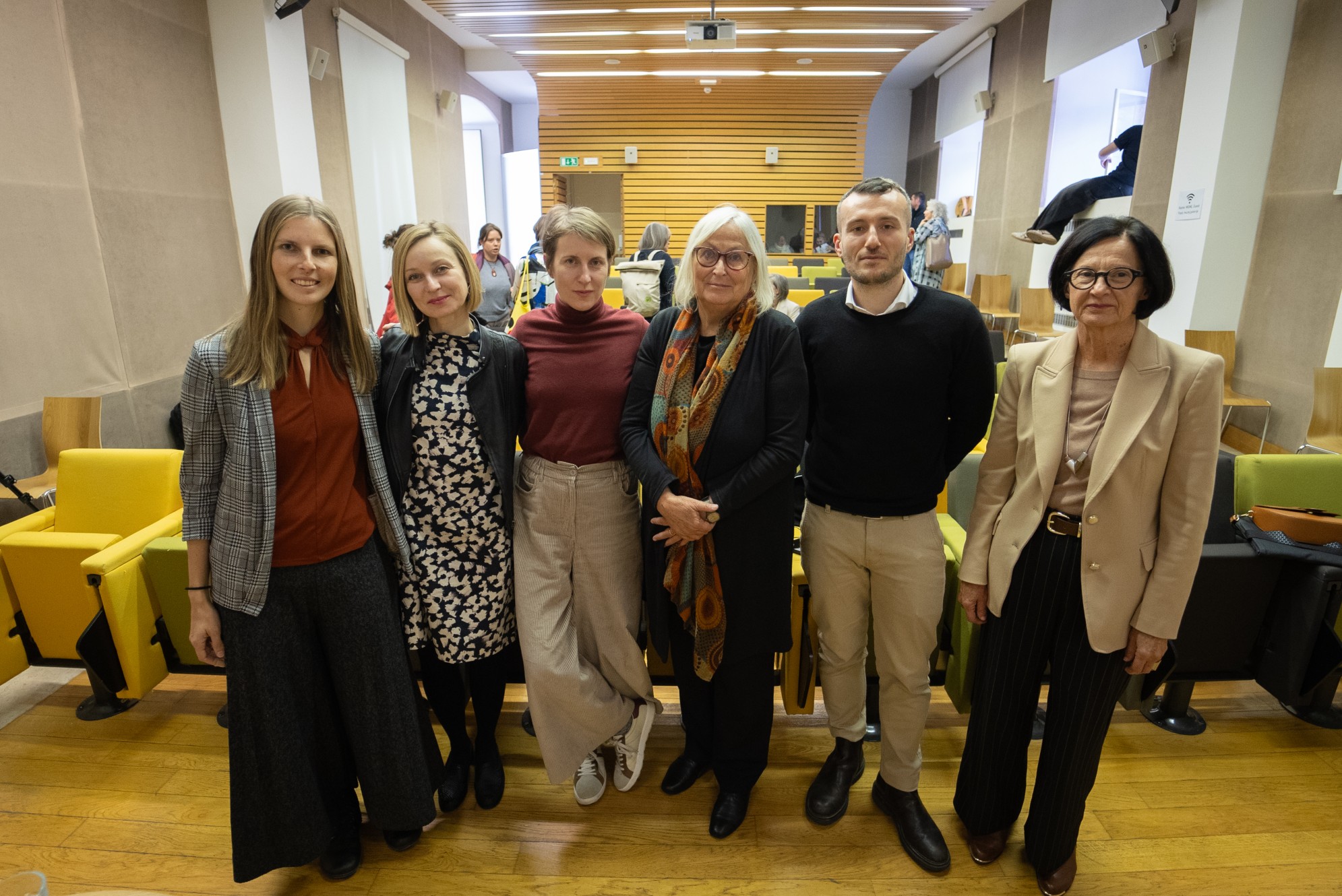
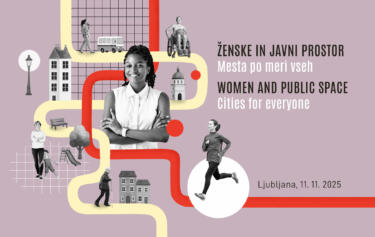
The conference Women and public space: Cities for everyone, held on 11 November 2025 at the City Museum of Ljubljana, brought together representatives of municipalities, state institutions, researchers, spatial planners and designers, and NGOs. It highlighted the central question of how spatial planning and design shape the everyday realities of women and other groups that urban policies frequently overlook.
Speakers underscored that public space is still largely designed around the needs of a supposedly neutral user – who, in practice, is often assumed to be a healthy adult man. Professional standards and established practice reinforce this norm, sometimes even shaping how women in the planning field themselves approach their work. At the same time, women have been pointing out the neglect of their own needs for decades, systematically collecting evidence of inequalities and pushing for fairness and visibility in spatial policy.
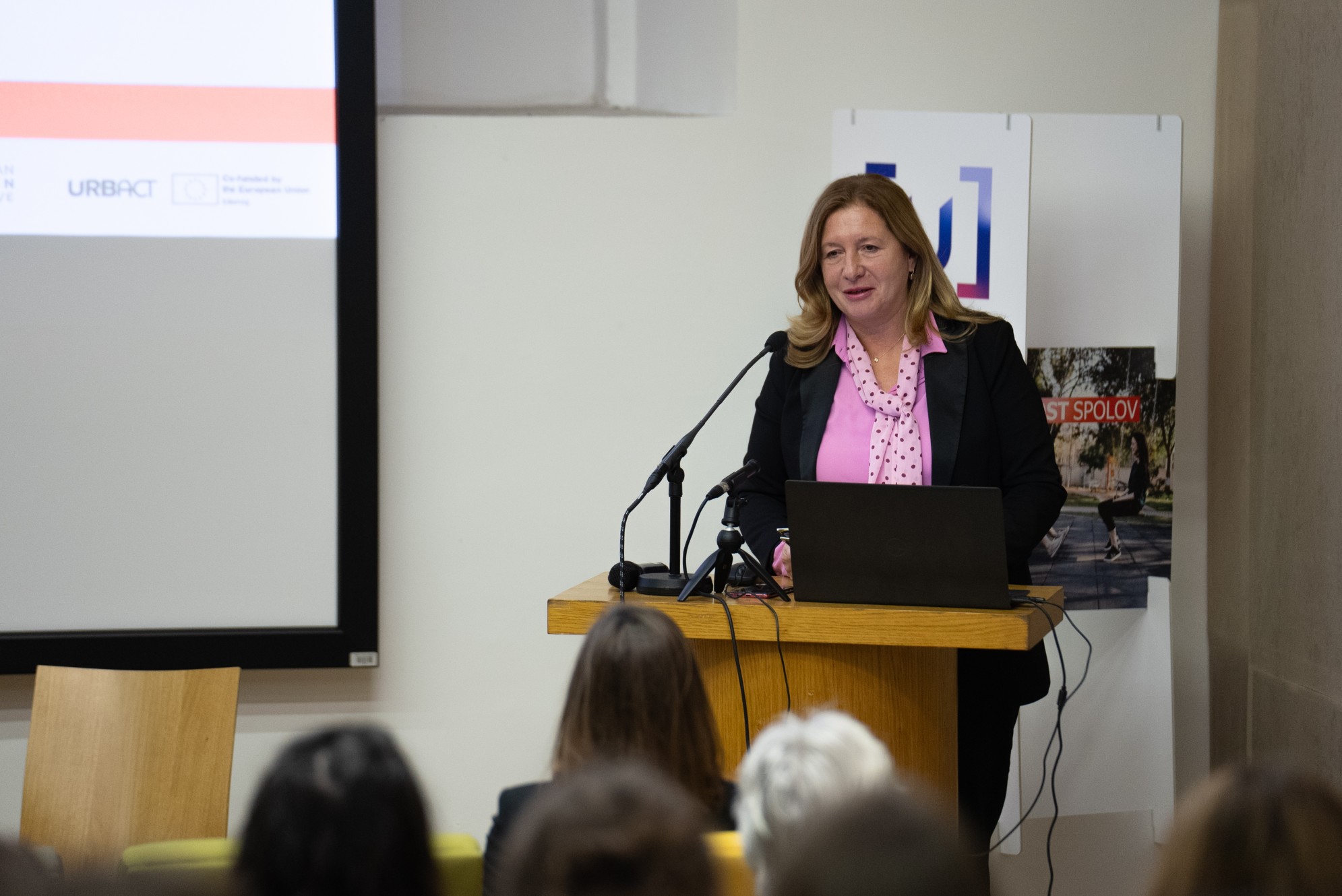
The Director-General of the Spatial Planning and Construction Directorate at the Ministry of Natural Resources and Spatial Planning, Dr Nataša Bratina, stressed that although Slovenia has made visible progress in gender equality and in some respects outperforms other European countries, spatial inequalities persist:
Numbers alone do not mean full equality and equal influence. What matters is how we include different perspectives and experiences in the decisions that shape our space.
She referenced the Road Map to Women’s Rights adopted by the European Commission earlier this year, noted that women remain underpaid and underrepresented in decision-making, and added that a new EU Strategy for Gender Equality after 2025 is in preparation. The 2024 EU Gender Equality Report warns that without additional measures, full equality in the EU is still 60 years away.
Foundations for understanding inequalities
Sociologist Dr Milica Antić Gaber from the Faculty of Arts, University of Ljubljana, introduced the topic by emphasising gender as a social construct and presenting findings on the structural nature of gender inequalities. Gender is continuously reproduced in everyday life: in the division of care work, mobility patterns, and perceptions of safety. She highlighted the critical lack of data in fileds:
Without gender-disaggregated data, inequalities remain invisible. If we cannot see them, we do not address them, and cannot solve them.

She also reminded the audience that planning must consider intersectionality: women’s needs differ widely according to age, class, ethnicity, disability, and other circumstances.
How children, teenage girls, and older women use cities
Slovak urban planner Dr Milota Sidorová used her own professional and personal experience and examples from across Europe to illustrate how women’s needs vary through life stages and how deeply they are connected to the quality of public space.
A good public space is one where we encounter many women, children, older people, and people with disabilities – because that means the space works for everyone.
She stressed that we never design space for young children alone, but also for their caregivers, requiring benches, public toilets, and lifts to be standard features in public spaces. Teenage girls often withdraw to the margins of public space because boys dominate playgrounds and open areas, prompting girls to seek sheltered corners and less exposed places. She also emphasised that mobility differences among adults are equally clear:
Women walk and use public transport more often. Men drive more often. This is not a stereotype—this is data.
Older women are among the earliest and most frequent users of public space; for them, lighting, benches, and safe public transport are essential: “We see them in public space most often, but they need basic conditions to feel safe there.”
30 years of integrating gender equality into urban development in Vienna
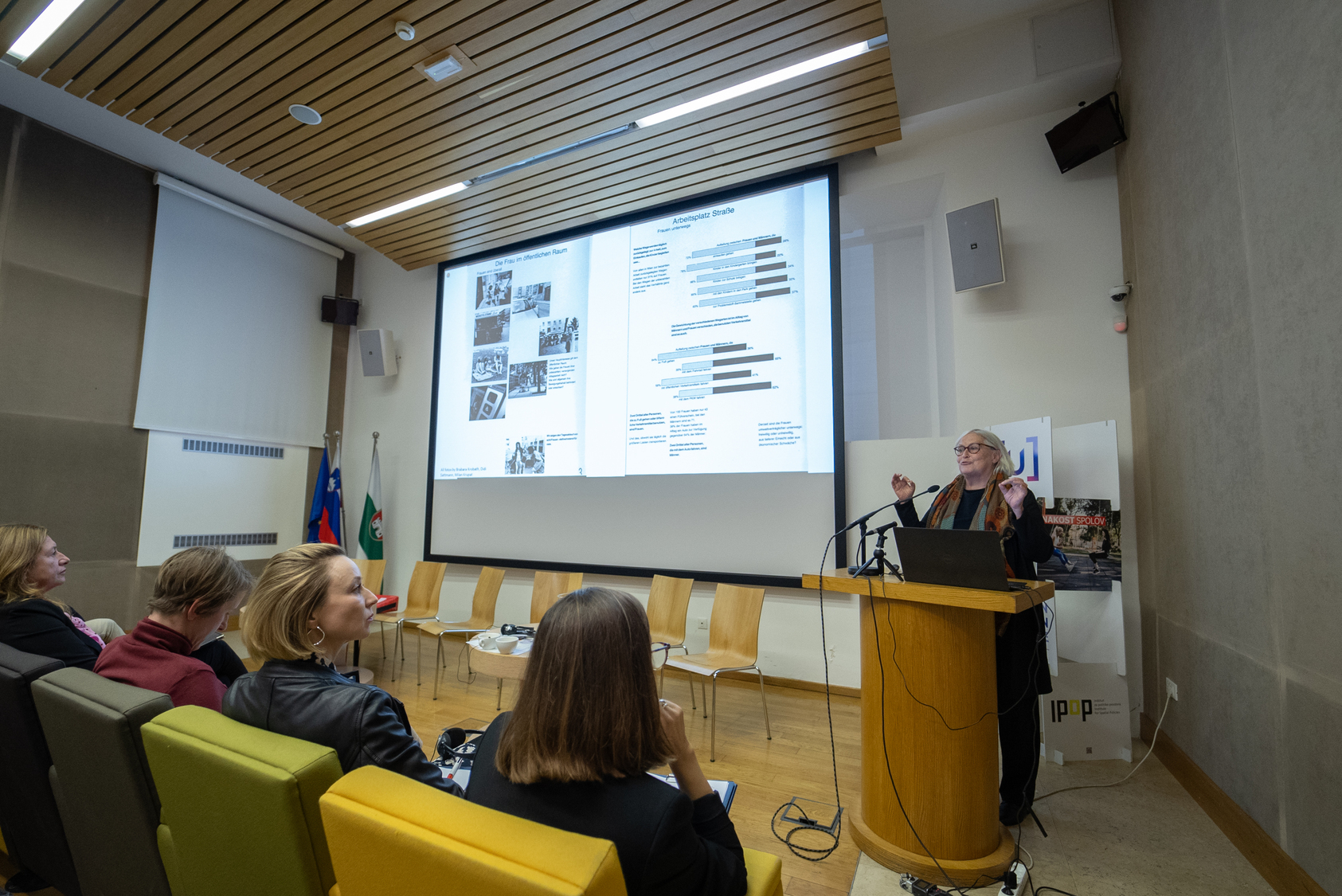
Gender expert Dr Eva Kail from Vienna, a pioneer of gender-sensitive urban planning, presented Vienna’s three decades of work in this field. She stressed that the city’s progress is rooted in early recognition that spatial planning is not neutral:
When we include different groups in planning, we do not create solutions only for women—we create solutions for everyone.
Vienna’s Women’s Office, established in the 1990s, systematically analysed public space from women’s perspectives. This led to pilot projects, from redesigned housing projects to studies of daily care-related routes. These early interventions demonstrated that inclusive planning increases safety, accessibility, and overall quality of life.
Kail highlighted playground redesigns that encourage equal use by girls and boys, gender-responsive housing projects, micro-location rules for safe school routes, and the inclusion of women in urban design juries. The city’s fairness check ensures major developments evaluate their impact on residents of different genders, ages, and life situations.
“Start with pilot projects. Once you show results, the doors open on their own.”
Today, Vienna is recognised as one of the most systematic and consistent examples of integrating gender equality into urban development.
Inequalities are measurable – feelings are data too
Polish architect and researcher Ewelina Jaskulska (Architektoniczki collective) introduced a perspective often missing from debates: how cities transform after dark. Night-time, she argues, is the most revealing test of fairness in public space. Well-functioning spaces during the day can become unsafe, poorly lit, or deserted at night – conditions that disproportionately affect women and other vulnerable groups.
To expose these differences, the collective organises WLINTA Night Walks, where women map their routes, feelings, and avoidance strategies:
When women map their routes, we sometimes find that because of feeling unsafe they walk twice as far. This isn’t just a feeling, it’s data.
Their research shows these detours are deliberate responses to “silent collective knowledge” of unsafe or uncomfortable places. Such patterns significantly affect women’s mobility, time, and freedom.
She also noted that exclusion begins early: school playgrounds often reproduce “football centrism,” narrowing activities to one dominant sport and pushing girls aside. Her findings demonstrate that safety and belonging are structural issues—outcomes of planning choices, not isolated incidents.
Gender equality as part of the wider urban system
Umberto Amoroso from the Italian city of Cento described how their work evolved within the URBACT PUMA network – from identifying gaps in mobility data to integrating gender equality into city operations. The whole process started when they noticed their mobility surveys had not effectively reached women, older people, or migrant communities.
Seeking inspiration and knowledge, Cento joined a City-to-City Exchange with Umeå (Sweden), one of Europe’s leading examples of gender-mainstreamed municipal governance. Umeå has spent more than 20 years embedding gender-disaggregated data and gender-impact assessments across all departments. Amoroso emphasised the importance of this experience:
In Umeå, for twenty years now, every department has been developing its policies based on clearly gathered data. This was a great inspiration for us.
Cento has since introduced regular data collection, cross-sectoral working groups, and pilot interventions on selected micro-locations. Women of different ages and backgrounds, from students, young mothers, migrant women, and older residents, were involved throughout. This process shifted the culture of municipal administration: gender equality became a criterion for quality service delivery, not an add-on.
Local experiences: Slovenian municipalities, architects, and researchers
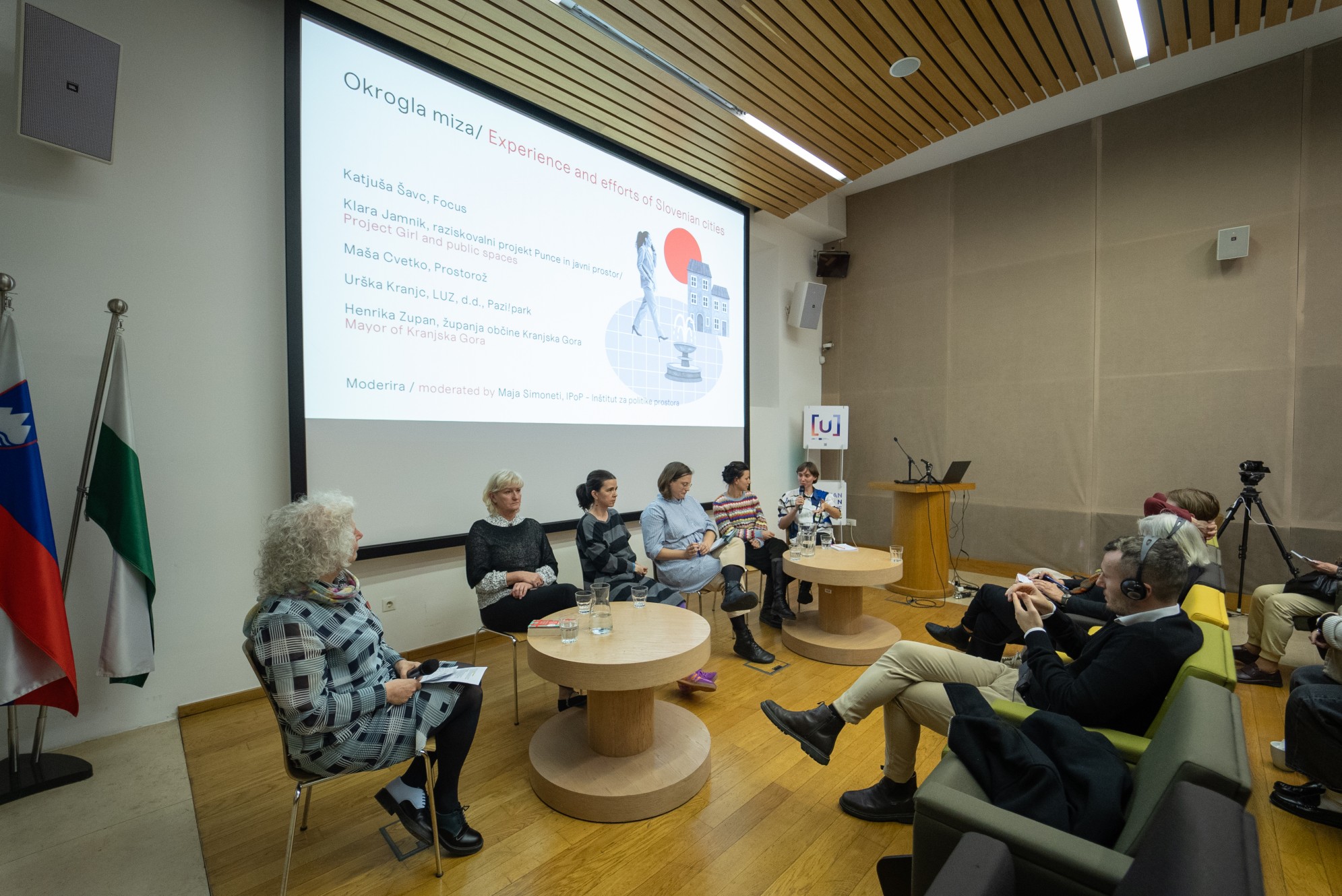
The closing round table examined the Slovenian landscape where progress is visible, but gaps remain. Many municipalities acknowledge the value of inclusive planning, yet struggle with limited staff, data, and tools.
Henrika Zupan, mayor of Kranjska Gora, stressed that spatial policies must align with daily life paths—especially those shaped by care work:
Women—as mothers, as workers, as caregivers—carry a large share of mobility and care-related trips. This must be reflected in how we design space.
Urška Kranjc (LUZ d.d. / Paz!park) highlighted the lack of intersectional approaches and how typical planning still centres a “default user,” sidelining women with diverse backgrounds. She underscored the importance of addressing unsafe and inaccessible school routes.
Katjuša Šavc (Focus) presented insights from energy and transport poverty research, showing clear gendered impacts:
Through work on transport poverty we found that gender directly affects what mobility options someone has.
Older women without driving licences, single mothers, and women with low incomes or impairments are most affected. She warned that sustainable urban mobility strategies rarely include gender-disaggregated data.
Maša Cvetko (Prostorož) pointed to the spatial exclusion of girls in parks and playgrounds, where design often privileges boys’ activities, especially football.
The project Girls and Public Space confirmed these findings. As Klara Jamnik explained, girls want more space, safer facilities, accessible public toilets, and places to socialise. Many report the strong spatial dominance of boys and withdraw as a result—affecting their confidence into adulthood.
Where does fair use of space begin?
The conference made clear that gender equality in public space is a key indicator of social maturity, and progress starts where everyday routes intersect—on streets, squares, paths, around schools, and at bus stops. The conference converged around three fundamental messages:
- Gender-disaggregated data are essential: without them, needs remain invisible.
- Pilot projects matter: small interventions can quickly improve safety, comfort, and accessibility.
- Gender equality is a foundation of quality spatial planning, not an optional extra.
Inclusive planning creates better spaces not only for women—but for everyone. Cities that recognise and plan for the diversity of their users become safer, more pleasant, and more just for the whole community.
















![[Conference Urban tourism]: Authenticity and local community satisfaction keys to success](https://www.ipop.si/wp-content/uploads/2023/11/Ipop_09_11_2023_Kranj_small_00043-375x237.jpg)
